
Research Overview
Integrated space–air–ground networking combines satellites, airborne relays, aircraft and terrestrial infrastructure. This research examines aeronautical ad hoc networks using real flight trajectories, with routing objectives spanning delay, capacity, route lifetime and energy efficiency.
Space–Air–Ground Network Architecture
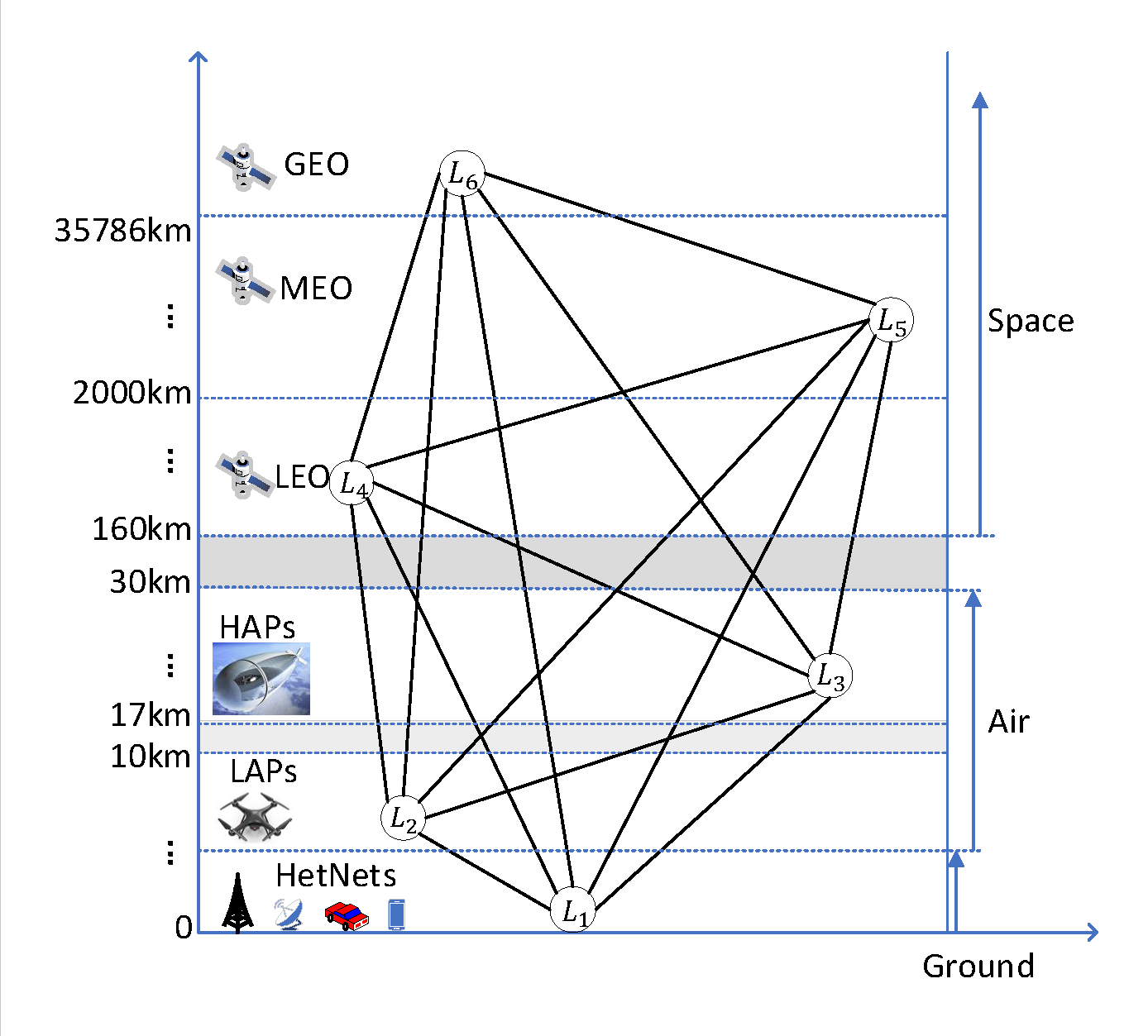
A layered architecture connects terrestrial base stations, low-altitude and high-altitude platforms, aircraft and orbiting satellites. Each layer has distinct coverage, propagation, mobility and connectivity constraints.
Selected Publications and Resources
Aeronautical Ad Hoc Networking
Aeronautical ad hoc networks use commercial aircraft as moving network nodes, potentially extending connectivity over oceans. Unlike stationary terrestrial topologies, available wireless routes change with flight paths and air traffic distributions.
Selected Publications and Resources
- Aeronautical Ad Hoc Networking for the Internet-Above-the-Clouds
- Semi-Stochastic Aircraft Mobility Modelling for Aeronautical Networks: An Australian Case-Study Based on Real Flight Data
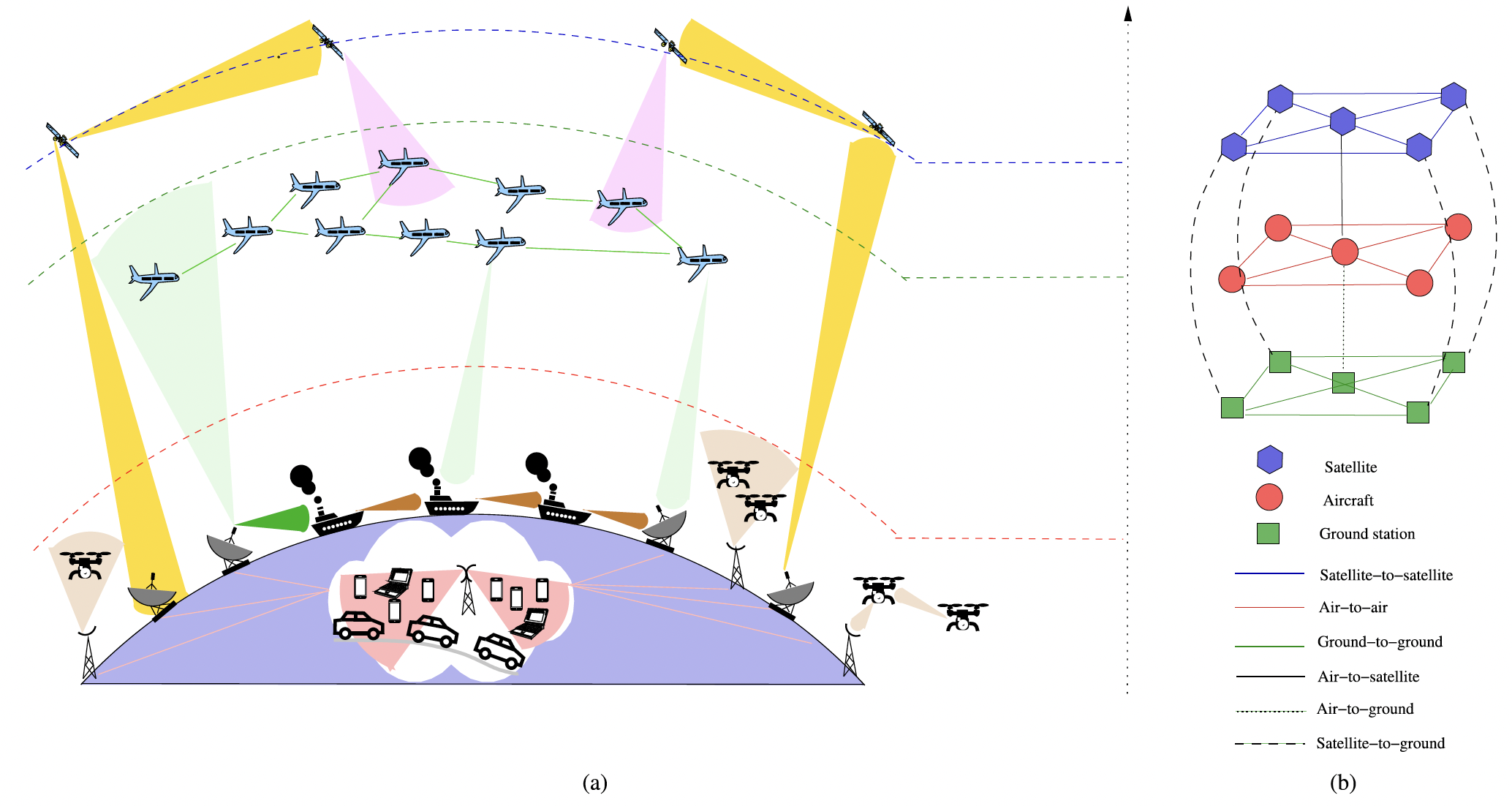
Aeronautical networking physical and logical topology
Single-Objective Optimizations
Single-objective algorithms typically minimise end-to-end delay subject to link-quality or throughput requirements. Source studies use aircraft movement records and shortest-path formulations to assess achievable routing performance.
Minimum-Delay Routing Demonstrations
The original research page provides three demonstrations of minimum-delay aircraft routing using Data 1, Data 2 and Data 3.
Multi-Objective Optimizations
Multi-objective routing seeks Pareto-efficient choices instead of one fixed weighted optimum. The analysis considers the trade-offs among path delay, capacity, lifetime and energy, including near-Pareto searches derived from real flight data.
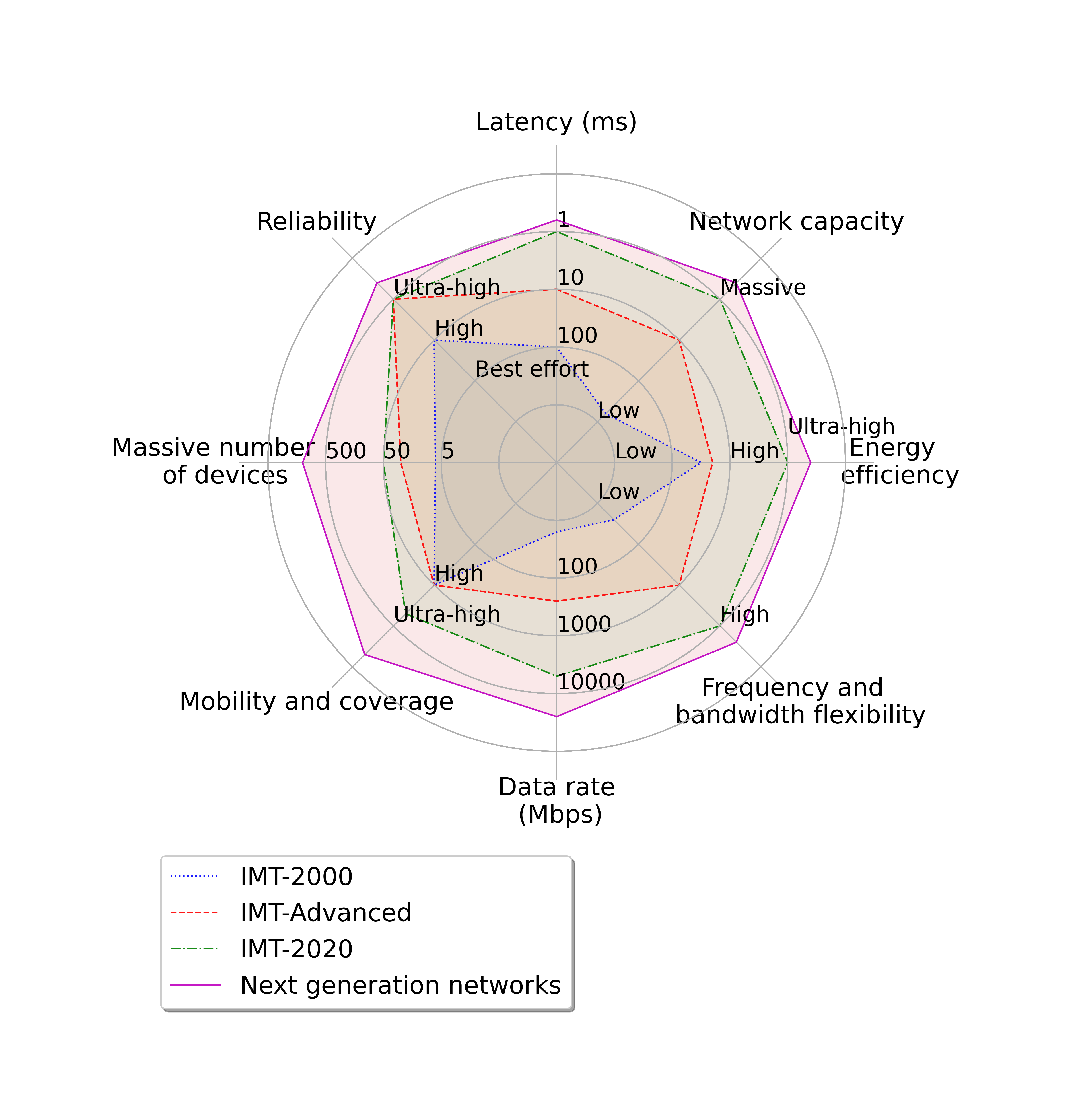
Future network performance indicators
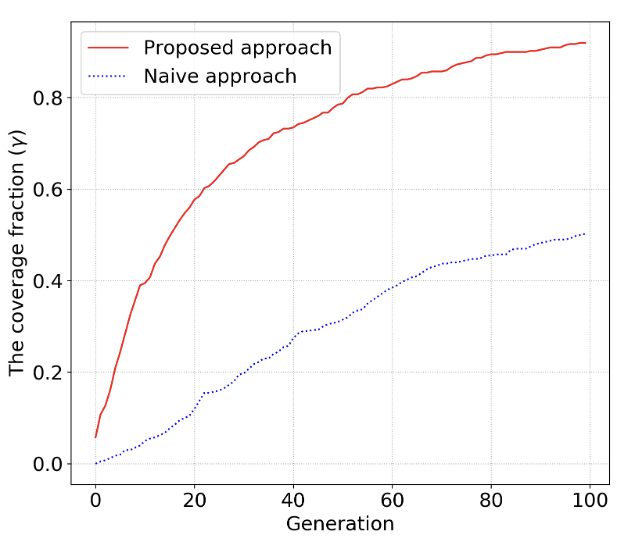
Near-Pareto coverage versus generation
Multi-Objective Routing Demonstrations
The two demonstrations illustrate the evolution of the identified solution front and the relation between network topology and the resulting front.
Deep Learning for AANETs
Deep reinforcement learning and feedforward predictors can estimate suitable next hops using local aircraft positions. Models trained on historical traffic and flight trajectories aim to avoid dependence on instantaneous global topology information.
UAV Communications
Unmanned aerial vehicles and high-altitude platforms introduce further mobility and coverage options, but also raise handover, interference and platform-energy issues in heterogeneous space–air–ground networks.